




Ask anyone in land acquisition how their week goes, and you'll hear a version of the same story. Reading 500-page municipal codes. Driving sites on a Saturday. Chasing landowners who never call back. And still bringing the deal home.
Land teams are some of the sharpest people in real estate. But they've been fighting with a hand tied behind their back.
That matters more right now than usual. Homes are harder to sell, budgets are tighter and every expense gets a second look. At the same time, the land you'll need two or three years from now still has to be found and tied up today. A bad deal costs more. So does a missed one.
The limit was never information
Most of what a land team needs is out there, and most of it is public record: ownership, boundaries, zoning, who sold what to whom. The limit was how much of the market a team could actually work.
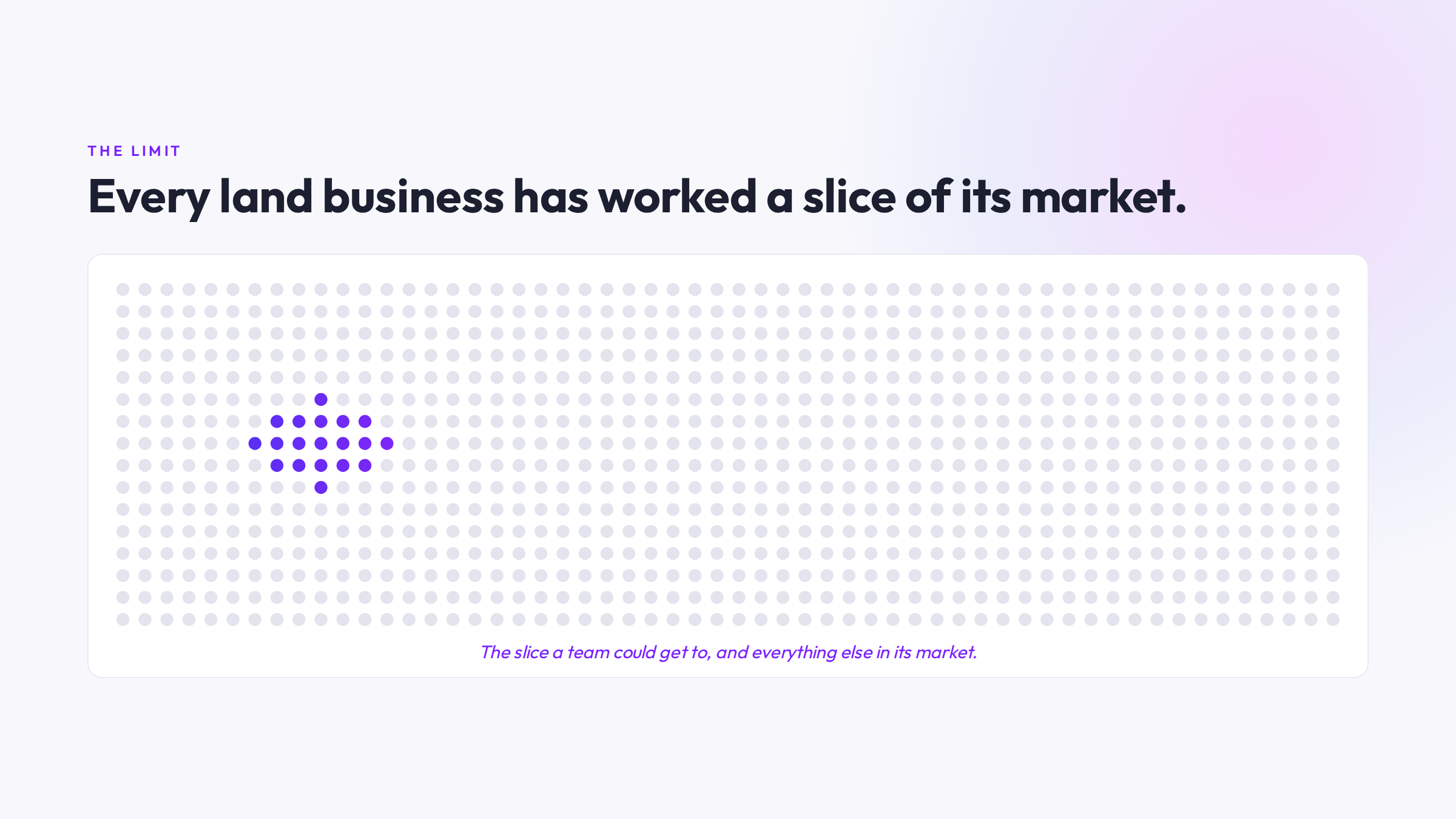
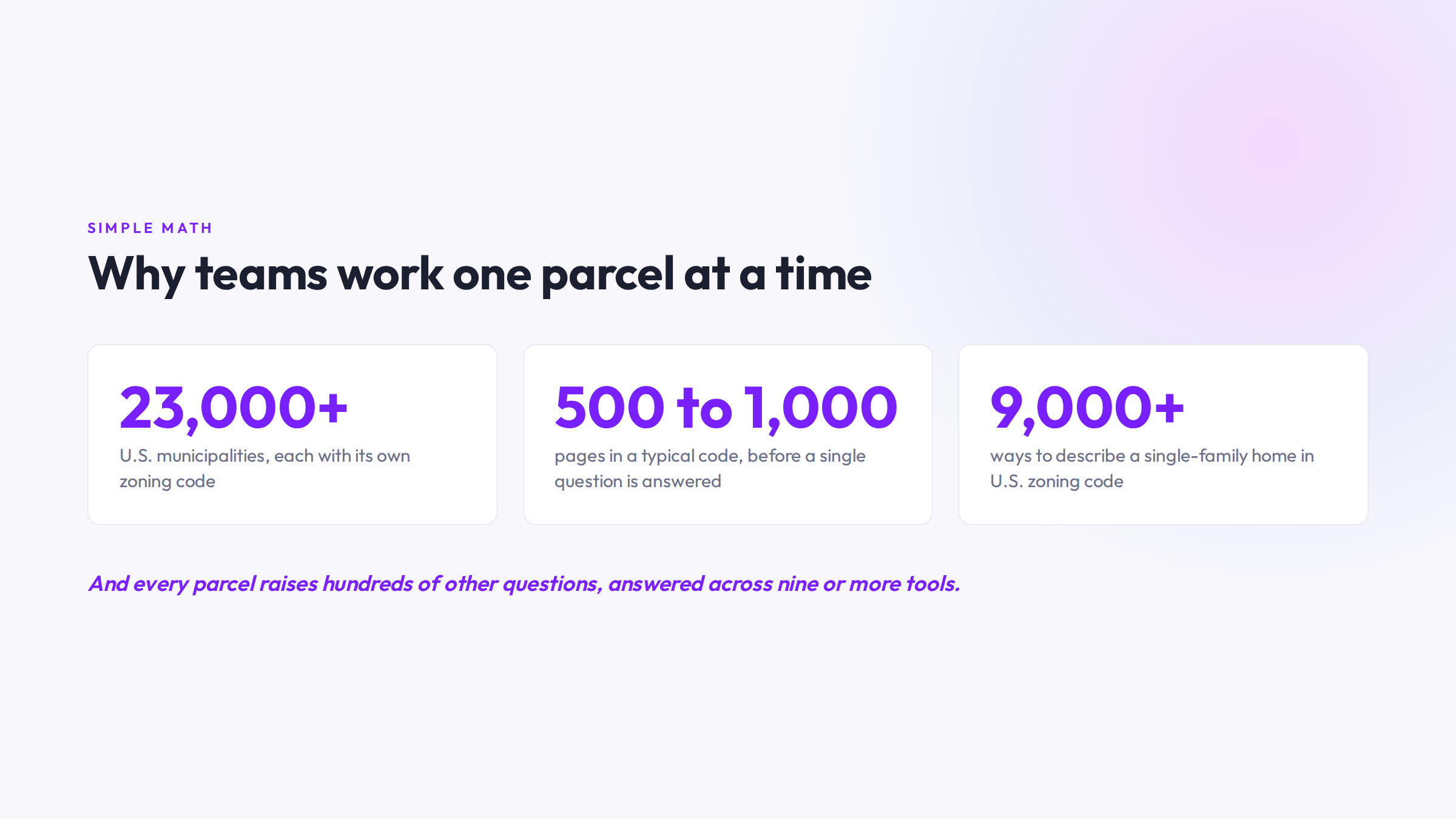
It's simple math. There are more than 23,000 municipalities in the U.S., each with its own zoning code, and a typical code runs 500 to 1,000 pages. There are more than 9,000 ways to describe a single-family home in those codes. And zoning is just the start. Every parcel raises hundreds of other questions, from school districts and utility service areas to flood plains, wetlands and endangered species, and every answer gets pieced together from nine or more tools that were never built to work together.
So land teams did the only rational thing. They worked the market one parcel at a time, in the order it reached them, and they got very good at those deals.
Why land took longer
Other industries made this shift years ago. Bond trading ran on phone calls until terminals put a live market on every desk. Freight ran on paper logs until every truck had a signal. Baseball was scouted by eye until every pitch was measured. In each case, the information already existed. It just wasn't workable.
Land was harder: more volume, less structure and more room for interpretation. Until recently, software couldn't handle that. Now AI-native software can read zoning code, parcel records and ownership data across all 50 states and turn them into answers in minutes. The field of play has become workable, all of it, all the time.
What whole-market acquisition means
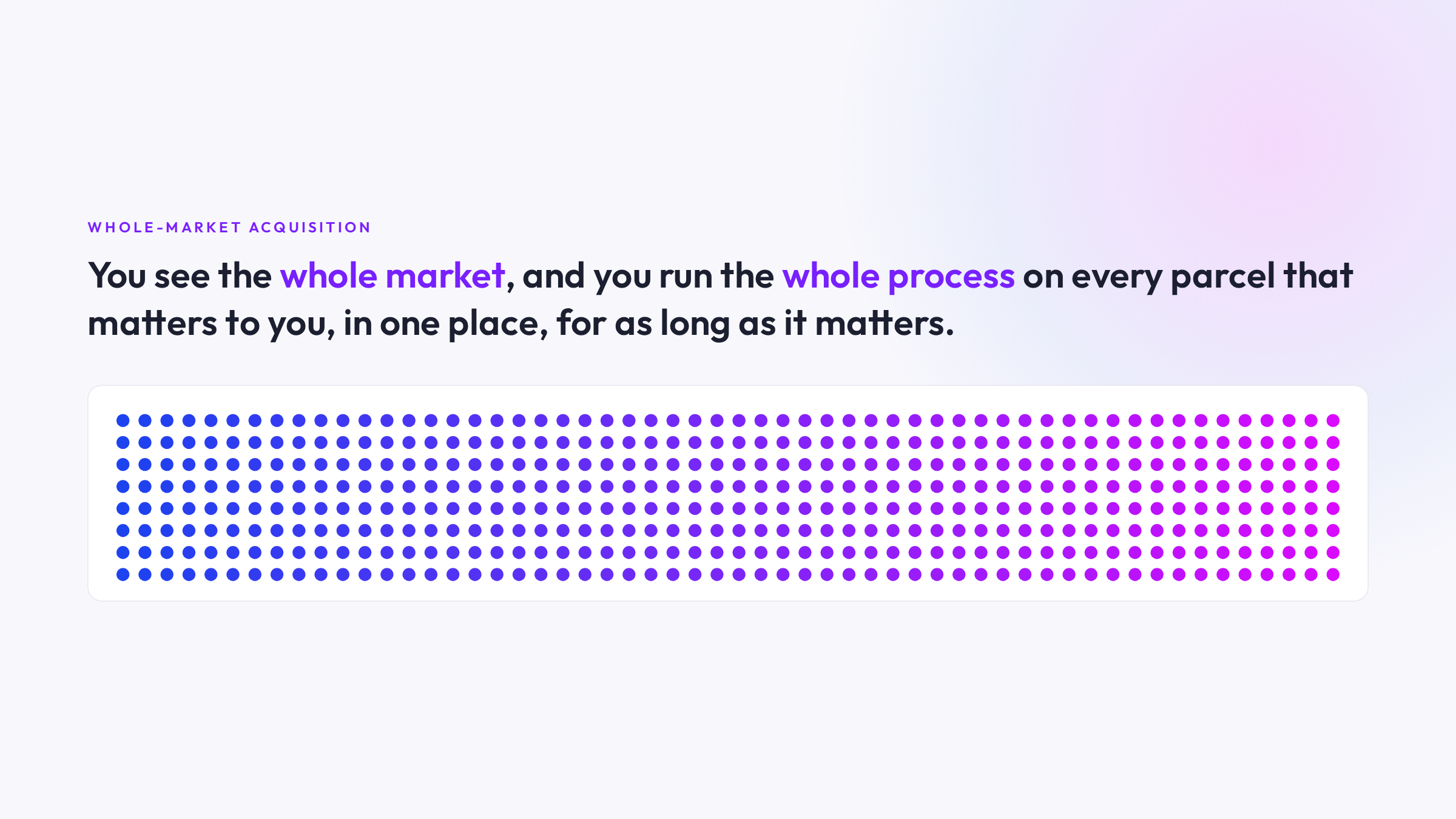
Whole-market acquisition is what land teams can do now. You see the whole market, and you run the whole process on every parcel that matters to you, in one place, for as long as it matters.
Right now, it's about discipline, not expansion. It isn't about buying more land. It's about choosing better. When a team can see its whole market, it can be selective, compare more options and put capital into the deals that work. It doesn't replace judgment. It gives experienced land people more of their market to apply that judgment to.
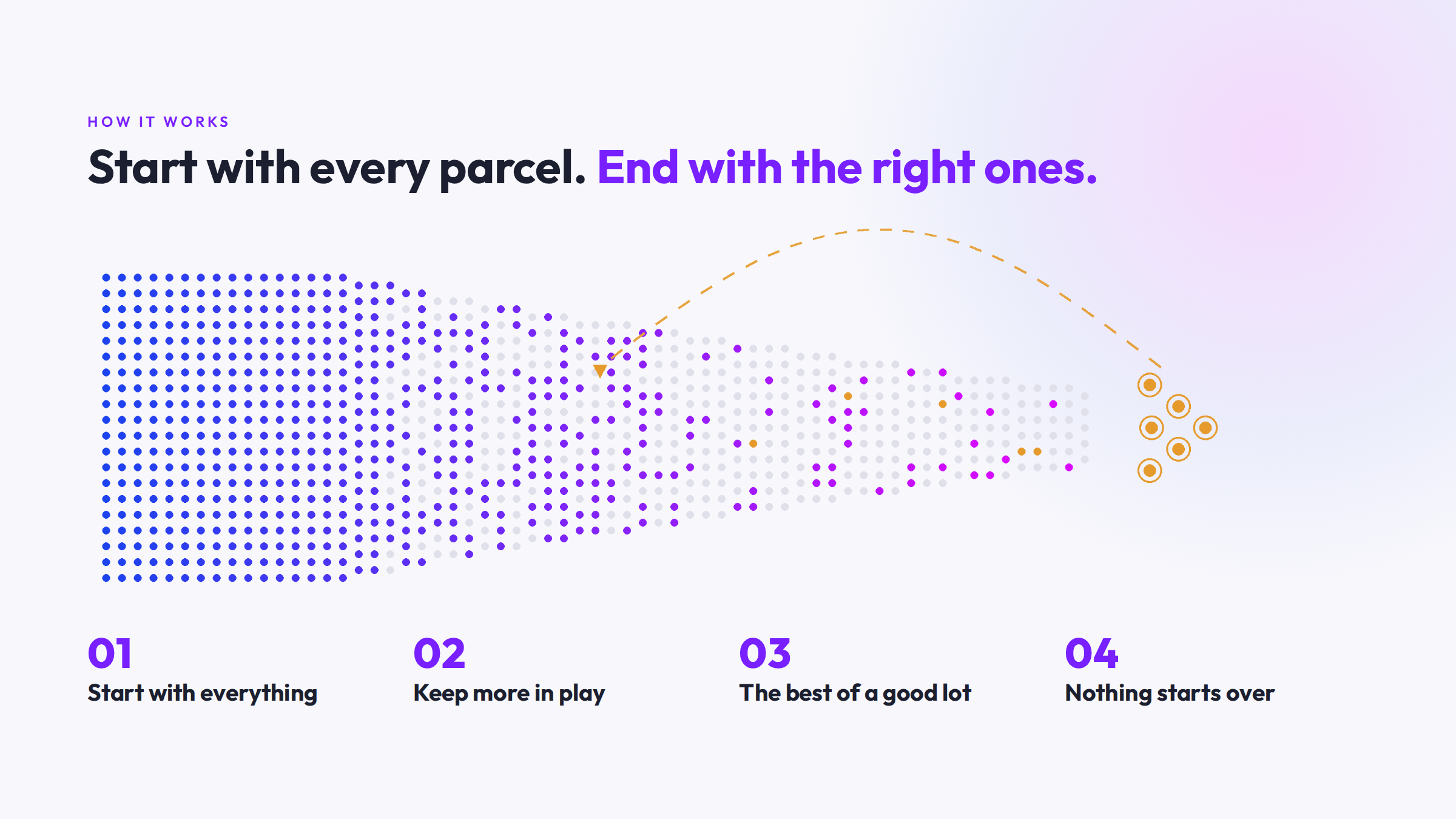
Day to day, it works in four stages: start with everything, keep more in play, choose the best of a good lot, and never start over. The report walks through each one, and what it changes about how a land team spends its week.
What teams are finding
Homebuilders, multifamily developers and brokers are already working this way. Two examples:
- City Ventures grew from 10 to 40 active deals under contract or in entitlement, with the same four people.
- The Gove Group took its landowner outreach response rate from 1% to 18%, with the same team.
The report includes six stories in full, including the community where a builder's best estimate was 150 available lots and the real number was 364.
"When you know your market well, you can still miss things." Alexx Monastiero, The Gove Group
[Download the report: Whole-Market Acquisition]
What's in the report
Our new report, Whole-Market Acquisition, goes deeper on every part of this:
- Why land teams have worked one parcel at a time, and the real costs of that model
- Why land took longer than other industries, and what changed
- How whole-market acquisition works, stage by stage
- Six stories from homebuilders, developers and brokers working their whole market
- What it takes to put it in place, including how M/I Homes rolled out across 17 divisions in under 30 days
The shift is already underway. The teams that keep working their whole market through this cycle are building the pipeline they'll need two years from now, today.
Want to see it on your own market? Pick a market you know well, and we'll run it end to end. Or bring one parcel you know well, and see everything Prophetic knows about it. [Schedule a demo]

