




The Accuracy Question Deserves a Direct Answer
Skepticism about AI accuracy in zoning interpretation is not unreasonable. Zoning codes are not standardized. Every municipality writes its own. The same word means different things in different jurisdictions. Overlay districts create exceptions to base regulations. Interpretive gray areas require judgment calls that go beyond code language.
So when someone asks whether you can trust AI for zoning, the right answer is not a blanket yes or no. It is a more precise answer: what kind of questions, to what level of accuracy, for what purpose?
Here is the honest breakdown.
What AI Does Well
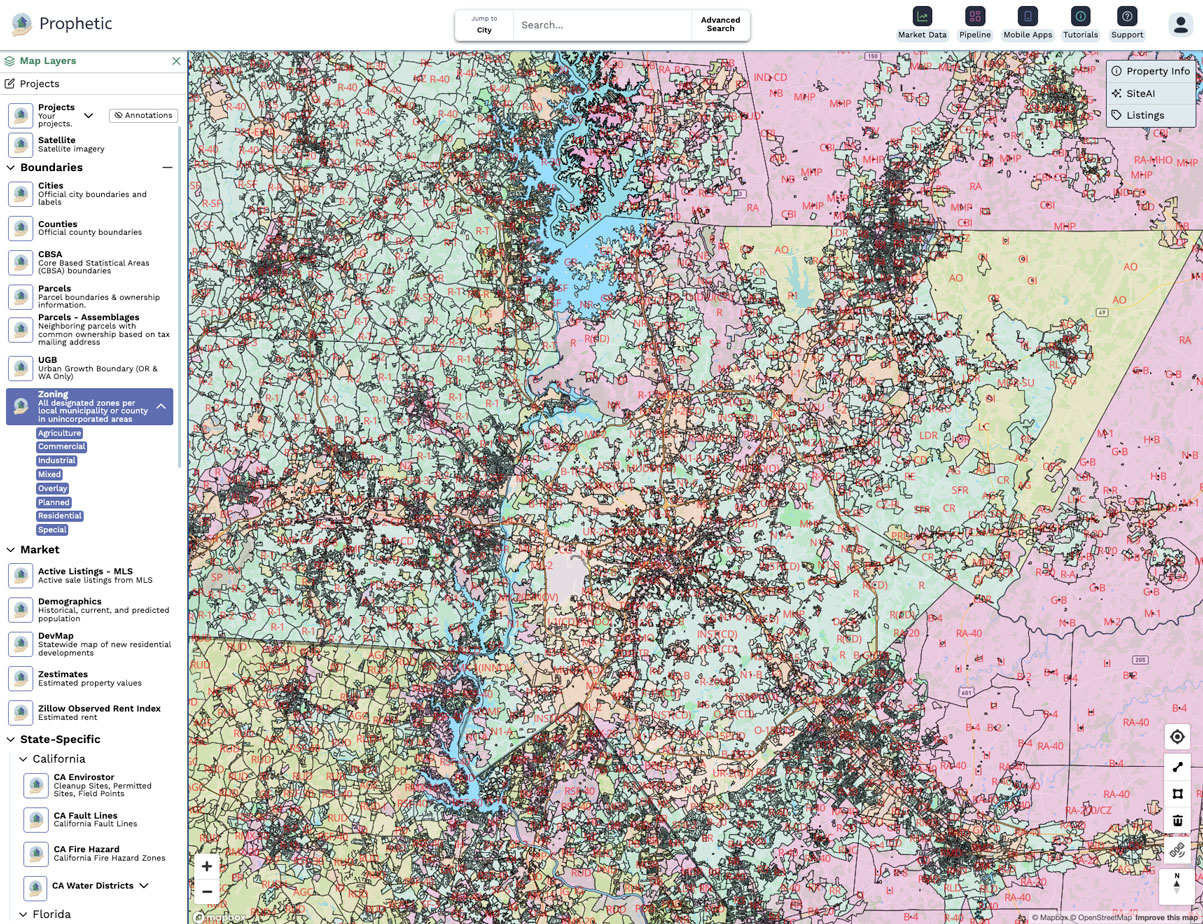
ZoneAI has pre-parsed municipal zoning codes across thousands of U.S. jurisdictions. For the questions land acquisition teams ask most often, the accuracy rate is high and the output includes source citations for verification.
What is the zoning designation on this parcel? Accurate in essentially every case. This is a database lookup, not an interpretation.
What uses are permitted by right in this zone? Accurate for most jurisdictions, with citations to the specific code section. Verifiable in seconds.
What are the setback requirements? Accurate for standard base zone setbacks. More complex for setbacks triggered by overlay districts, which vary by jurisdiction and require additional review.
What is the minimum lot size or maximum density? Accurate for base zone regulations. Density bonuses, inclusionary requirements, and ADU allowances may require additional investigation.
For the vast majority of early-stage evaluation questions, AI-generated zoning answers are accurate, fast, and cited. A team member can verify any answer in the same time it takes to read the output.
Where Human Judgment Still Matters
There are zoning questions that AI handles well and zoning questions that require experienced human judgment. Knowing the difference is the key.
Conditional use permits require staff interpretation. Whether a proposed use meets the criteria for a conditional approval in a specific jurisdiction, with a specific planning director, at a specific moment in the political cycle, is a judgment call that no software replaces.
Rezoning probability is a political assessment, not a regulatory one. AI can tell you the current zone and the process required for rezoning. It cannot tell you whether a particular planning commission will approve it.
Complex overlay districts with non-standard language may require a planning attorney or local consultant to interpret correctly. ZoneAI will flag complexity and cite the relevant provisions. The interpretation judgment is yours.
For these cases, ZoneAI gets you to the right questions faster. It does not replace the expertise required to answer them.
The Real Risk Is Not AI Error. It Is Manual Error at Scale.
Here is the comparison that the accuracy debate often misses. The alternative to AI-powered zoning interpretation is a team member reading municipal codes manually. That process is also subject to error. A missed overlay district. A misread density table. A code section that was updated and the team member was working from an outdated version.
Manual zoning research at scale, across dozens of parcels per week in multiple jurisdictions, produces meaningful error rates. The question is not whether AI introduces any error. The question is whether AI introduces more error than manual research conducted at a comparable volume and speed.
For the questions asking if AI is accurate, the answer is clearly yes. AI parses the code consistently, cites the source, and returns the same answer every time for the same input. Manual research introduces human variability, fatigue effects, and the knowledge gaps that come from working in unfamiliar jurisdictions.
ZoneAI does not eliminate zoning interpretation risk. It concentrates human attention on the genuinely ambiguous cases where expert judgment matters, rather than distributing it across every parcel equally.
Built-In Transparency
Every ZoneAI output includes source citations. When ZoneAI returns a setback requirement, it cites the specific municipal code section it drew from. When it identifies a permitted use, it shows the relevant code language. Your team can verify any output in seconds.
This is not a defensive feature. It is a design principle. The goal is not to replace expert judgment with a black box. It is to give expert judgment a faster starting point with a documented trail.
What Customers Say
- "Prophetic's built-in zoning analysis has completely transformed how we evaluate land for development. We can assess far more parcels in a fraction of the time." — VP of Land Acquisition, Mid-Market Developer
- “Prophetic is like having a nail gun instead of a hammer; it fundamentally changes how I work and what I can do.” - Land Acquisition Specialist at a Multi-state Homebuilder
- "Prophetic instantly helped us confirm that our plans were already allowed under existing zoning, saving time and money on a significant deal." — Regional Developer
The Verdict
AI zoning interpretation is accurate for the questions it was built to answer. It is transparent about its sources. And it concentrates human expertise where it actually matters rather than requiring experts to manually read every line of every code in every jurisdiction.
The risk is not trusting AI for zoning analysis. The risk is continuing to do it manually at a scale that guarantees inconsistency.
See ZoneAI answer zoning questions live on a real parcel. Book a demo.